Phishing Led 84 of 247 Cyber Breaches Reported in 2024
In the OAIC's July to December 2024 report, phishing caused 84 of 247 cyber incident breach notifications, ahead of ransomware at 60 and stolen credentials at 51. Here is what that means for the logins on your business website.
 Vikas Thakur Founder, RockingWeb 4 min read
Key takeaways
- Phishing caused 84 of 247 cyber incident notifications from July to December 2024, or 34%
- Ransomware caused 60 notifications and compromised or stolen credentials caused 51
- The median ransomware breach affected 819 people, against 77 for phishing
- Malware had the highest median, at 2,229 people, from just 12 notifications
- The figures cover notified breaches, not every attack, and not small business alone
According to the OAIC’s July to December 2024 Notifiable Data Breaches report, phishing was the top cause of cyber incident breaches, with 84 of 247 notifications (34%).
Phishing means someone tricks a person into giving up a login. That login could be the one for your website, your hosting or your email. This post shows the numbers, then the few habits that cut the risk.
What the OAIC counted
The OAIC breaks cyber incidents into six named kinds plus one “other”. Here are the notification counts for July to December 2024.
| Cause of cyber incident | Notifications | Share of 247 |
|---|---|---|
| Phishing (compromised credentials) | 84 | 34% |
| Ransomware | 60 | 24% |
| Compromised or stolen credentials (method unknown) | 51 | 21% |
| Hacking | 23 | 9% |
| Brute-force attack (compromised credentials) | 16 | 6% |
| Malware | 12 | 5% |
| Other | 1 | under 1% |
Percentages are our rounding of the OAIC’s counts.
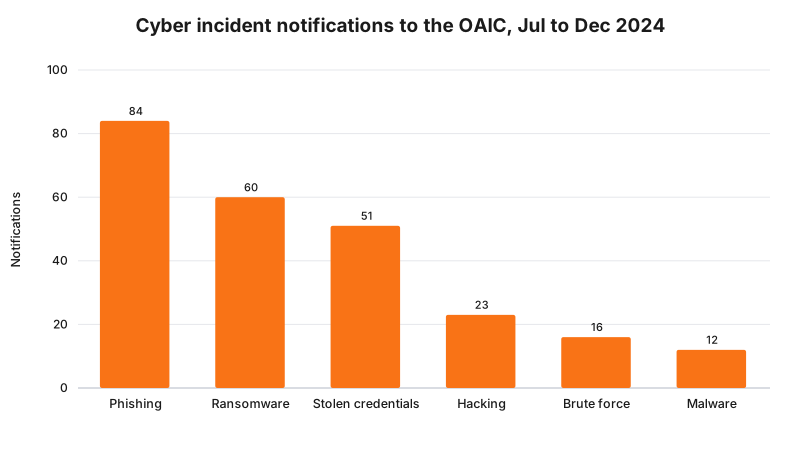
Three of the top three causes involve a login. Phishing steals one, stolen credentials is the same problem by an unknown route, and ransomware often arrives through the same door.
Takeaway: if the login is the weak point, protect the login first.
How many people each breach touched
The OAIC also reports the median number of people affected per kind of incident.
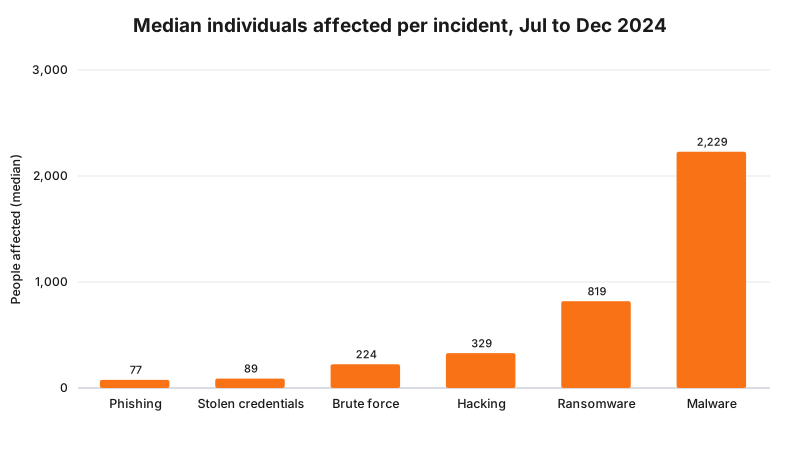
Ransomware and malware sit well above phishing on the median. Phishing is the most frequent cause, so its numbers are the lowest per incident but the highest in count.
Habits that match the numbers
- One password per account. Use a password manager so you do not reuse the same one on your host, your registrar and your email.
- Turn on multi-factor authentication wherever the provider offers it, starting with email and website admin.
- Limit who has admin. A former staff member or old freelancer with a login is a risk you can remove in ten minutes.
- Check the sender, then the link. A real supplier will not mind you ringing them on a number you already hold.
- Keep a recent copy of the site stored somewhere your website login cannot reach.
These steps are general good practice, not claims from the OAIC report. The report measures what was notified, and it does not test which habits stop which attack.
Frequently Asked Questions
What was the most common cause of cyber incident breaches in the OAIC’s July to December 2024 report?
Phishing that led to compromised credentials, with 84 of 247 cyber incident notifications (34%). Ransomware followed with 60, and compromised or stolen credentials by an unknown method with 51.
Do these figures describe small businesses?
Not specifically. They describe notifications made to the OAIC by entities covered by the scheme, across all industries. Most small businesses with turnover of $3 million or less are outside the scheme unless an exception applies.
Which logins on a business website matter most?
The ones that can change the site or reach customer data, such as your website admin, hosting, domain registrar and email accounts. Use a unique password for each and turn on multi-factor authentication where the provider offers it.
Is a small number of affected people good news?
A low median can sit beside a high average. For phishing, the OAIC reports a median of 77 affected individuals and an average of 1,220, so a few large cases pull the average up.
What to do next
If you would like someone to review who holds admin access to your site and where your backups live, see web design in Rockingham or the pages for Mandurah and Cockburn, then contact us.
Sources
OAIC, Notifiable Data Breaches Report: July to December 2024
. Table 3, cyber incident breakdown by median and average numbers of affected individuals. Read 3 November 2026.OAIC, Small business
. Source of the $3 million small business definition. Read 3 November 2026.
Last reviewed: 3 November 2026.
Vikas Thakur
Founder of RockingWeb. 16 years of experience from working at TPG, iiNet and Monadelphous, now building websites, software and digital marketing for local businesses in Rockingham and Perth.