1 Million Aussies Book Medical Appointments Online Every Month
Australians now book roughly 1 million medical appointments online every month, according to Healthengine's November 2025 booking data. Telehealth use has fallen from its pandemic peak but still sits above one in five people. Here is what the numbers mean for a clinic website and booking flow in 2026.
 Vikas Thakur Founder, RockingWeb 8 min read

On this page 9
- Key takeaways
- How Australians Are Booking Medical Appointments Online
- Telehealth Usage Is Down From Its Pandemic Peak
- The Data at a Glance
- The General Practice Landscape Behind These Numbers
- What the Booking Data Means for Your Clinic Website
- FAQ
- Get Your Clinic Website Ready for the Booking Shift
- Sources and References
Key takeaways
- Australians now book roughly 1 million medical appointments online every month, according to Healthengine, which passed 100 million total bookings on 18 November 2025
- Healthengine’s booking volume grew more than 30% in the past year, and more than 50% of bookings now happen through its mobile app rather than a desktop browser
- The platform lists over 10,000 practices and clinics and nearly 30,000 practitioners across Australia
- 22.5% of Australians used telehealth in the 2024-25 financial year, down from a pandemic peak of 30.8% in 2021-22, per the Australian Bureau of Statistics
- 90.3% of people who used telehealth said they would use it again if offered, the same ABS survey found
- Australia has 7,132 accredited general practices staffed by 40,375 GPs, delivering 172 million services to 22.6 million patients in the past year, according to the RACGP
- 76% of Australians say financial pressures are now changing their healthcare decisions, per Healthengine’s own September 2025 survey
- The average GP fee for a short consult rose from $78 to $82, the RACGP’s 2025 Health of the Nation report shows
Australians now book close to 1 million medical appointments online every month, according to Healthengine, Australia’s leading digital healthcare marketplace, which crossed 100 million total bookings on 18 November 2025. That volume grew more than 30% in a single year, and over half of it now happens through a phone, not a browser tab on a desktop. Telehealth tells a different story: usage has dropped from a pandemic peak of 30.8% of Australians in 2021-22 to 22.5% in 2024-25, per the Australian Bureau of Statistics, though 90.3% of people who tried it would use it again. Patients have not gone back to ringing the front desk. They have gone back to booking through a website, an app, or a search result, with less patience for a broken form or a missing time slot. This piece walks through what the data actually says, and what it means for how a medical or cosmetic clinic should build its website in 2026.
How Australians Are Booking Medical Appointments Online
No government agency publishes a national count of online medical bookings, so the closest available figure comes from the platform that processes the most of them. Healthengine, operating since 2006, announced on 18 November 2025 that it had processed 100 million appointment bookings, with a current run rate of approximately 1 million bookings a month across over 10,000 practices and clinics and nearly 30,000 practitioners.
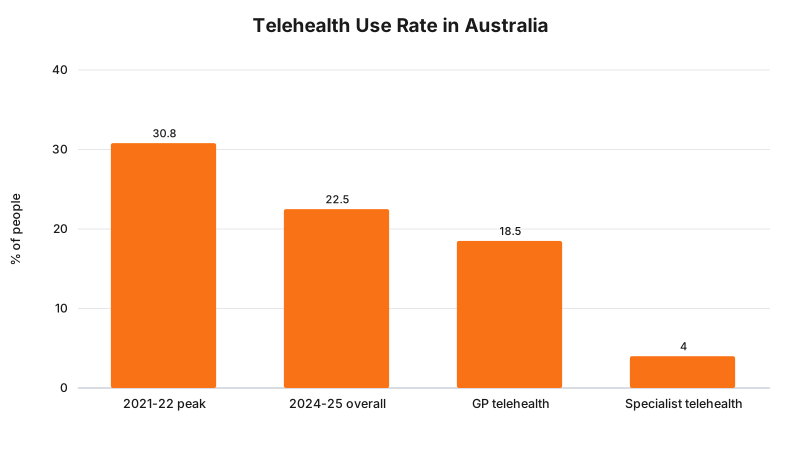
The growth curve is steep. Healthengine reports overall usage grew more than 30% in the past year, and more than 50% of its bookings now complete through its mobile app rather than a desktop site. That is a company-reported figure from a private business, not audited government data, so treat it as the platform’s own reporting rather than an official statistic.
Takeaway: the booking channel that matters most for a clinic website in 2026 is a phone screen, not a desktop monitor, and that gap is only widening.
Telehealth Usage Is Down From Its Pandemic Peak
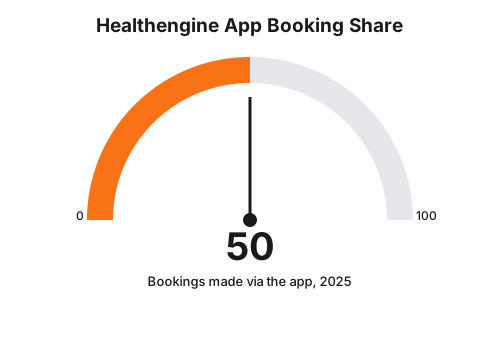
The Australian Bureau of Statistics tracks telehealth use through its Patient Experiences survey, a telephone survey of people aged 15 and over run as part of the Multipurpose Household Survey. The 2024-25 edition, released 18 November 2025, found 22.5% of people used telehealth services, down from a peak of 30.8% in 2021-22. Broken down by consultation type, 18.5% of people had a telehealth consultation with a GP and 4.0% had one with a medical specialist.
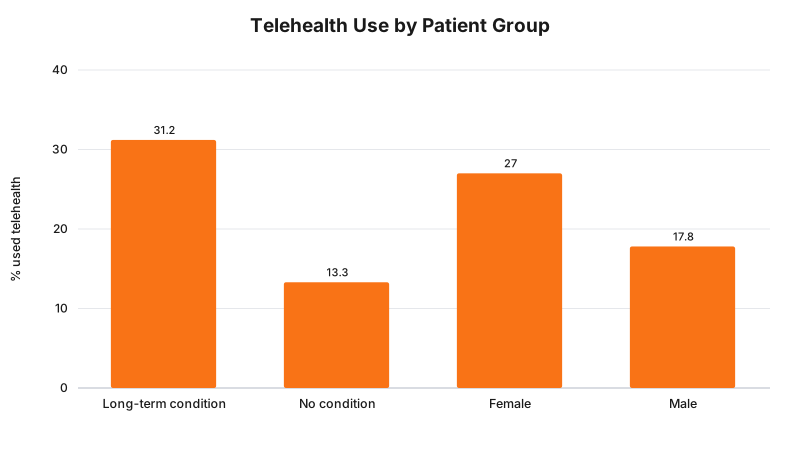
The drop is not a rejection of the format. Of the people who used telehealth, 90.3% said they would use it again if it was offered. Usage is also uneven: people with a long-term health condition used telehealth at 31.2% against 13.3% for people without one, and women used it at 27.0% against 17.8% for men.
Takeaway: telehealth is no longer the default it was during lockdowns, but it remains a mainstream option that a meaningful share of patients still expect to see offered on a clinic’s own booking page.
The Data at a Glance
| Metric | Figure | Source and period |
|---|---|---|
| Medical appointments booked online per month | ~1 million | Healthengine, Nov 2025 |
| Total bookings processed since 2006 | 100 million | Healthengine, Nov 2025 |
| Share of bookings made via the mobile app | 50%+ | Healthengine, 2025 |
| Practices and clinics listed on the platform | 10,000+ | Healthengine, Nov 2025 |
| Telehealth usage, 2024-25 | 22.5% | ABS, Nov 2025 |
| Telehealth usage, pandemic peak (2021-22) | 30.8% | ABS, Nov 2025 |
| Accredited general practices in Australia | 7,132 | RACGP, Oct 2025 |
The General Practice Landscape Behind These Numbers
The RACGP’s General Practice: Health of the Nation 2025 report, published October 2025, puts a scale on the sector these booking and telehealth figures sit inside. Australia has 7,132 accredited general practices staffed by 40,375 GPs, who delivered 172 million health services to 22.6 million patients over the preceding 12 months. The average patient fee for a short consultation rose from $78 to $82 over the same period.
That is more than 7,000 individual websites and booking systems, run by practices of wildly different sizes, competing for the same pool of patients who are increasingly comfortable booking on a phone. A separate Healthengine survey from September 2025 found 76% of Australians say financial pressures are now changing their healthcare decisions, so price transparency and a working booking flow carry more weight in a patient’s choice of practice than they did a few years ago.
Takeaway: a clinic competing in a market of over 7,000 practices cannot afford a website that is slower or less clear than the booking platforms patients already use.
What the Booking Data Means for Your Clinic Website
Three things follow from the numbers above, and none of them require guessing at figures that are not published.
First, mobile is not a secondary experience for a clinic website. If more than half of all online medical bookings already happen on a phone, a booking form that only works cleanly on desktop is turning away the majority channel.
Second, telehealth demand has not disappeared, and different patient groups use it at different rates. The usage gap by health status and by gender is a reasonable basis for deciding which service pages get a dedicated telehealth booking option, rather than adding it everywhere or nowhere.
Third, a dedicated landing page is worth building for a treatment with genuine, sustained enquiry volume, not for every procedure a clinic offers. The pages that convert best load fast on mobile, show real availability, and answer the questions a patient already has before they call. For a cosmetic clinic specifically, what those pages can say is constrained by AHPRA’s advertising rules, separately from anything to do with booking technology. A page can have a flawless booking widget and still breach the rules on testimonials, before and after imagery, or outcome claims, so content and booking flow need checking separately. RockingWeb builds cosmetic clinic websites around this split, and can review a site’s content against the current advertising rules before booking volume becomes a liability rather than an asset. Get in touch to have your site reviewed.
Takeaway: the booking and telehealth data point to the same conclusion, build for mobile first, be selective about which pages carry a telehealth option, and keep compliance checks separate from booking-flow decisions.
FAQ
How many medical appointments do Australians book online each month?
Around 1 million, according to Healthengine, the booking platform that passed 100 million total appointments on 18 November 2025. More than half of its bookings now happen through its mobile app rather than a desktop browser.
Has telehealth use in Australia gone up or down since the pandemic?
Down. The Australian Bureau of Statistics recorded a peak of 30.8% of people using telehealth in 2021-22, falling to 22.5% in 2024-25. Even so, 90.3% of people who used telehealth said they would use it again if offered.
Does an online booking widget make a clinic website AHPRA compliant?
No. Online booking and AHPRA compliance are separate things. AHPRA’s advertising rules govern what a clinic can say about its treatments, not whether patients can book online, so a booking form next to non-compliant content does not fix the breach.
Which treatments are worth a dedicated landing page on a clinic website?
Any treatment with genuine, sustained enquiry volume, not just the ones a clinic finds easiest to write about. With more than half of online bookings now happening on mobile, a dedicated page needs to load fast, show availability clearly, and stay inside AHPRA’s advertising rules for the content it carries.
Get Your Clinic Website Ready for the Booking Shift
RockingWeb builds and audits websites for cosmetic clinics and medical practices against the mobile-first, AHPRA-aware standard covered above. We can check your site’s content and booking flow separately, so you know which one needs the work.
Sources and References
Healthengine - secondary/company source: 100 million total bookings, ~1 million bookings a month, 10,000+ practices, nearly 30,000 practitioners, 50%+ app share, 30%+ year-on-year growth, all as of 18 November 2025
Healthengine - secondary/company source: 76% of Australians changing healthcare decisions due to financial pressures, September 2025
Australian Bureau of Statistics - Patient Experiences, 2024-25: telehealth usage rates, GP and specialist telehealth split, and demographic breakdowns, released 18 November 2025
RACGP - General Practice: Health of the Nation 2025: number of accredited practices, GP workforce size, patient volumes, and average consultation fees, published October 2025
Related reading:
- AHPRA Advertising Guidelines for Cosmetic Clinics: the current rules on testimonials, before and after imagery, and outcome claims
- Cosmetic Clinic Website Design in Australia: what a compliant, mobile-first clinic website looks like
- Clinic Conversion Rate Benchmark: how booking and enquiry conversion is measured for cosmetic clinics
For a website built around how patients actually book in 2026, see ClinicPipeline or talk to us about your clinic’s website.
Vikas Thakur
Founder of RockingWeb. 16 years of experience from working at TPG, iiNet and Monadelphous, now building websites, software and digital marketing for local businesses in Rockingham and Perth.