Digital Smile Design Cost Australia: $300 to $1,500
Digital smile design costs $300 to $1,500 as a stand-alone planning fee in Australia, per published pricing from Aesthetik and The Veneer Studio. A full DSD-guided smile makeover costs far more, up to $30,000 depending on scope.
 Vikas Thakur Founder, RockingWeb 10 min read
On this page 9
- Key takeaways
- What Digital Smile Design Actually Means
- The DSD Planning Fee Costs $300 to $1,500
- What a Full DSD-Guided Smile Makeover Costs
- Where the Money Goes in a DSD-Guided Porcelain Veneer
- Porcelain Veneers Cost $1,200 to $2,500 Per Tooth
- The Market Driving DSD Adoption in Australia
- AHPRA Rules Apply to DSD Before/After Mockups Too
- How RockingWeb Helps Dental Practices Turn DSD Into Bookings
Key takeaways
- A digital smile design (DSD) mockup costs $300 to $1,500 in Australia as a stand-alone planning fee, per Aesthetik and Melbourne’s The Veneer Studio
- A full DSD-guided smile makeover costs $2,500 to $30,000, per Kensington Dental Care’s published Adelaide pricing
- DSD-planned clear aligners alone, no veneers, cost $7,500 to $10,000, per House of Smile Design
- Within a DSD-guided porcelain veneer, the digital smile design step is 28.2% of the total cost, while lab fabrication is 46.2%, the largest single line item
- Porcelain veneers, the usual outcome of a DSD plan, cost $1,200 to $2,500 per tooth, rising past $3,000 at some premium metro practices
- Australia’s cosmetic dentistry market was worth USD 369.2 million in 2022 and is forecast to hit USD 1,119.4 million by 2030, a 14.9% CAGR, per Grand View Research
- 61% of Australians delayed dental treatment in the past 12 months, and 63% of those cited affordability, per the ADA’s 2024 Dental Health Week survey of 25,000 people
- AHPRA/Dental Board advertising rules cap penalties at $60,000 for an individual and $120,000 for a body corporate per breach, relevant to any DSD before/after mockup used in marketing
Digital smile design costs $300 to $1,500 in Australia as a stand-alone planning fee, according to published pricing from two Australian sources: Aesthetik’s cost-breakdown guide and Melbourne’s The Veneer Studio. That is the number most people want when they search “digital smile design cost.” It is also the number almost no page online states clearly. Most results either quote a full smile-makeover price in the tens of thousands, or skip pricing altogether and push you toward a free consultation. We checked what Australian dental practices publish, for the planning stage and for the treatment that follows it. Here is what a DSD mockup costs on its own, what it costs once porcelain veneers or aligners get added, and where every dollar in the bigger number goes.
What Digital Smile Design Actually Means
Digital smile design is not a single treatment. It is a planning process. A dentist photographs and films the patient’s face and bite, then uses software to build a digital mockup of the proposed result before a single tooth gets touched. The patient sees the shape, size, and colour of the new smile on screen, and can ask for changes before committing to porcelain, composite, or aligners.
That distinction matters for the search term “digital smile design cost.” Someone searching it usually means one of two different things: what the planning session itself costs, or what the whole treatment costs once DSD has mapped it out. Australian clinics that publish pricing keep those two numbers separate, and this post does too.
Practices marketing DSD tend to bundle it into a veneer or aligner case rather than sell it as a stand-alone service, which is part of why a clean, single “DSD price” is hard to find. The Veneer Studio in Melbourne is one of the few practices that lists a DSD fee on its own.
Takeaway: “digital smile design cost” almost always means two different numbers, the planning fee and the treatment total, and mixing them up is the fastest way to misread a quote.
The DSD Planning Fee Costs $300 to $1,500
Two Australian sources publish a price for the digital mockup stage on its own. Aesthetik, an Australian cosmetic dentistry education resource, breaks a porcelain veneer quote into four components and prices the “digital smile design/wax-up” line item at $300 to $800. The Veneer Studio in Melbourne lists its stand-alone DSD service starting at $500 and running to $1,500.
The two ranges overlap between $500 and $800, which is the closest thing to a corroborated figure this post can offer. Expect somewhere in that band for a mockup session alone, with $1,500 as the upper end at practices that build out a fuller digital treatment plan rather than a simple preview.
| Service | Price Range (AUD) | Source |
|---|---|---|
| DSD mockup/wax-up (component of a veneer quote) | $300 to $800 | Aesthetik |
| DSD stand-alone service | $500 to $1,500 | The Veneer Studio, Melbourne |
| Combined range | $300 to $1,500 | Both sources |
Neither figure includes the treatment that follows. A mockup is a planning fee, not a deposit on porcelain or aligners, though several practices credit part of it toward treatment if the patient proceeds.
Takeaway: if a quote for “digital smile design” alone comes in over $1,500, ask what it includes beyond the mockup. Both published Australian prices for the planning stage sit under that figure.
What a Full DSD-Guided Smile Makeover Costs
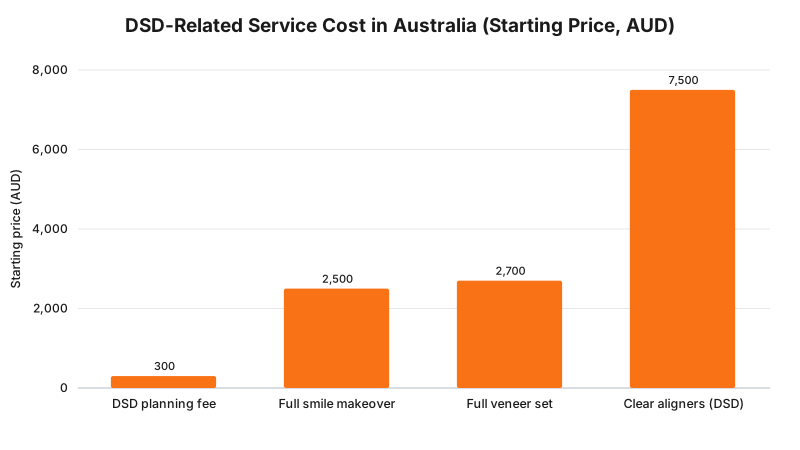
The planning fee is the smallest number in this post. Once treatment starts, three Australian sources show where the bigger money goes. Kensington Dental Care in Adelaide prices a full DSD-guided smile transformation at $2,500 to $30,000, depending on how many teeth and which materials the plan calls for. House of Smile Design prices DSD-planned clear aligners on their own, no veneers, at $7,500 to $10,000.
Those two figures sit in different scope categories. One covers a full smile case that might include whitening, bonding, or veneers. The other covers orthodontic movement alone. That is why the narrower aligner-only price can sit above the low end of the broader makeover range without contradicting it. RockingWeb’s own review of published Australian veneer pricing found a full 6-to-10-tooth veneer set costs $2,700 to $20,000, a range that sits inside Kensington’s wider $2,500 to $30,000 window and gives a second, independently checked source for the same order of magnitude.
| Treatment Scope | Price Range (AUD) | Source |
|---|---|---|
| Full DSD-guided smile makeover | $2,500 to $30,000 | Kensington Dental Care |
| Full veneer set (6 to 10 teeth) | $2,700 to $20,000 | RockingWeb review of AU practice pricing |
| Clear aligners only (DSD-planned) | $7,500 to $10,000 | House of Smile Design |
Takeaway: the DSD mockup itself is a few hundred dollars, but the treatment it plans rarely is. Budget against the treatment total, not the planning fee.
Where the Money Goes in a DSD-Guided Porcelain Veneer
Aesthetik’s four-part cost breakdown answers a different question: once someone commits to porcelain veneers planned through DSD, how does that total split up? Using the midpoint of each published range (consultation $50 to $250, diagnostic records $200 to $500, digital smile design $300 to $800, lab fabrication $600 to $1,200 per tooth), the digital smile design step accounts for 28.2% of the total on a single-tooth basis, and lab fabrication is the largest single component at 46.2%.
That breakdown is illustrative, not a fixed quote, Aesthetik says as much on its own page. But it explains something quotes rarely spell out: the “digital smile design” line item is a modest slice of the eventual bill, not the main cost driver. The ceramist building the veneer in a lab is.
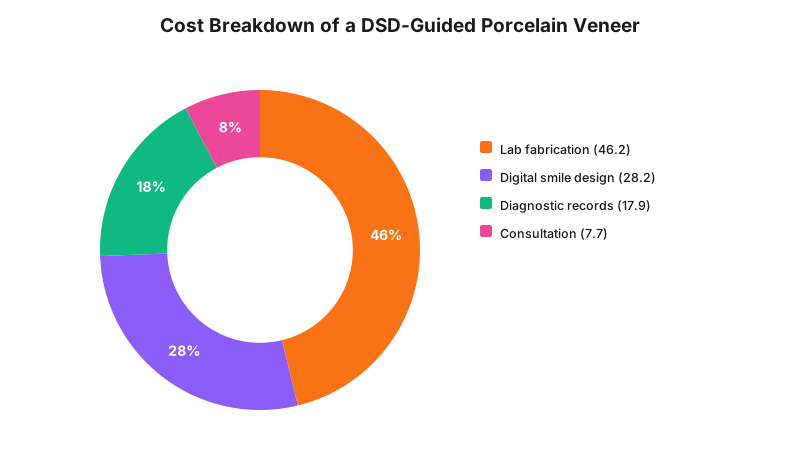
Takeaway: digital smile design adds real cost, but it is not what makes a smile makeover expensive. Lab fabrication runs roughly 1.6 times the size of the DSD line item on its own.
Porcelain Veneers Cost $1,200 to $2,500 Per Tooth
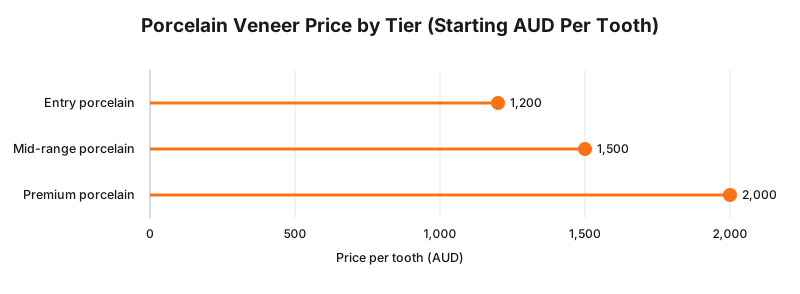
Porcelain is the material most DSD plans end in, since it holds colour and shape closest to the digital mockup the patient approved. Across published Australian practice pricing, porcelain veneers run $1,200 to $2,500 per tooth, climbing past $3,000 at some Sydney eastern-suburbs practices. RockingWeb’s separate veneer pricing review breaks that range into three rough tiers.
| Tier | Price Per Tooth (AUD) | What Changes |
|---|---|---|
| Entry porcelain | $1,200 to $1,500 | Standard ceramic, in-house or overseas lab |
| Mid-range porcelain | $1,500 to $2,000 | Digital smile design included, local ceramist |
| Premium porcelain | $2,000 to $2,500+ | Senior cosmetic dentist, premium ceramic |
Composite is the cheaper alternative some DSD plans use instead, at $300 to $1,200 per tooth, but it wears faster and stains sooner. That is why most dentists quote a 5-to-7-year lifespan against porcelain’s 10 to 15.
Takeaway: material choice, not the DSD planning step, is what moves a quote from four figures to five.
The Market Driving DSD Adoption in Australia
DSD is not a niche add-on anymore. Grand View Research values Australia’s cosmetic dentistry market at USD 369.2 million in 2022, forecast to reach USD 1,119.4 million by 2030, a 14.9% compound annual growth rate. Within that market, the dental veneers segment alone is forecast to grow from USD 63.9 million in 2023 to USD 112.1 million by 2030, an 8.4% CAGR, a segment DSD sits directly upstream of since most veneer cases now start with a digital plan.
Demand is growing against a backdrop of cost pressure, not despite it. The Australian Dental Association’s Dental Health Week 2024 survey of 25,000 people found 61% of Australians delayed dental treatment in the past 12 months, a 17% rise over the past 13 years, and 63% of those cited affordability, a 12% increase on the 2022 survey round. RockingWeb’s full market breakdown covers the other procedure categories driving that growth.
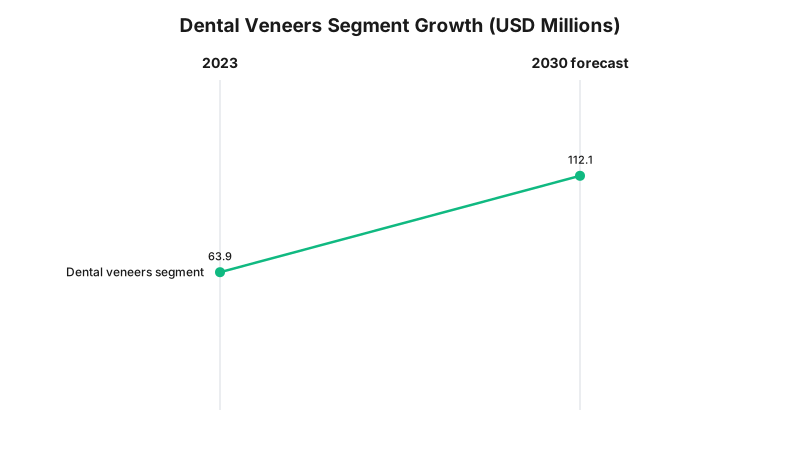
Takeaway: the DSD-adjacent market is growing at roughly triple the rate of general healthcare spending, even as most patients say cost is what keeps them out of the chair.
AHPRA Rules Apply to DSD Before/After Mockups Too
A DSD mockup produces exactly the kind of image AHPRA’s advertising rules were written to restrict: a side-by-side of a patient’s current smile against the proposed result. Under section 133 of the Health Practitioner Regulation National Law, using that image in marketing, on a website, in a social media post, in a practice brochure, without meeting the current advertising guideline requirements carries a maximum penalty of $60,000 for an individual practitioner and $120,000 for a body corporate, per breach. AustLII, section 133 sets out the offence itself.
The Dental Board of Australia sits under the same AHPRA-governed National Law as the medical boards, and the same restrictions on testimonials, outcome claims, and unapproved before/after imagery apply to a dental practice’s DSD marketing as they do to a cosmetic medicine clinic’s. RockingWeb’s dental advertising rules guide covers exactly what a DSD mockup can and cannot show in a public-facing ad.
Most practice websites publishing DSD before/after content were built before the current guideline amendments existed, which means most have never been checked against them. Talk to RockingWeb to find out whether your own site’s DSD gallery sits inside the rules or on exposure you do not know about.
Takeaway: a DSD mockup is a clinical tool first, but the moment it goes on a website or a feed, it becomes an advertisement, and advertisements carry a $60,000 to $120,000 penalty band if they get the rules wrong.
How RockingWeb Helps Dental Practices Turn DSD Into Bookings
A DSD mockup is one of the strongest conversion tools a cosmetic dental practice has. A patient looking at their own proposed smile is closer to booking than one reading a generic before-and-after claim. Most practice websites do not use it that way. The mockup lives in a consultation room instead of on the page meant to turn a search for “digital smile design cost near me” into a booked appointment.
RockingWeb builds AHPRA-compliant websites for cosmetic clinics and dental practices, designed to convert DSD-curious visitors into consultations without tripping the advertising rules covered above. That means pricing pages that answer the cost question directly instead of hiding behind a “contact us for a quote” form, and before/after content structured to stay inside the current guideline requirements.
If your practice already runs DSD and wants a website built around it, get in touch to talk through what that looks like for your case mix.
Data sources: Aesthetik’s published veneer cost breakdown; The Veneer Studio (Melbourne), Kensington Dental Care (Adelaide), and House of Smile Design’s published DSD pricing; Grand View Research’s Australia cosmetic dentistry market outlook; the Australian Dental Association’s 2024 Dental Health Week survey; AHPRA, Health Practitioner Regulation National Law section 133.
Vikas Thakur
Founder of RockingWeb. 16 years of experience from working at TPG, iiNet and Monadelphous, now building websites, software and digital marketing for local businesses in Rockingham and Perth.