Clinical Photo Storage: On-Device, Cloud, and the Offshore Question
Before and after photos taken on a staff phone, saved into a practice management platform, or synced to a cloud photo library are all personal information under the Privacy Act, and moving them to an overseas recipient triggers Australian Privacy Principle 8. Here is where clinical photos actually end up in a typical cosmetic clinic, and what to check before the next one is taken.
 Vikas Thakur Founder, RockingWeb 13 min read
Key takeaways
- A treatment photo showing a patient’s face or body is personal and sensitive information under the Privacy Act, the same as a name or a medical record
- Health service providers, cosmetic clinics included, are covered by the Privacy Act regardless of turnover, so the small business exemption was never in play here
- The highest-risk storage location is not the practice management platform. It is a personal staff phone with cloud backup switched on, which sits outside any vendor agreement your clinic can point to
- A bolt-on clinical imaging app is a separate overseas recipient from your main booking platform, even when both sit inside the same patient workflow
- Health service providers reported 225 of 1,205 data breach notifications to the OAIC in 2025, more than any other sector
- No published OAIC determination names an Australian clinic for an offshore clinical photo breach specifically, but a 2020 international incident involving roughly 900,000 exposed clinic photo files shows the failure mode is real, not theoretical
- This obligation is in force, and has applied since the current Australian Privacy Principles commenced in March 2014
Every cosmetic clinic that takes before and after photos is disclosing personal information the moment that photo leaves the device it was taken on. Under Australian Privacy Principle 8 (APP 8), doing that to an overseas recipient without reasonable steps first is a Privacy Act problem, whether the photo went to a staff member’s iCloud account, a practice management platform’s imaging module, or a bolt-on app nobody in the clinic remembers approving. As at 24 September 2026, that rule has applied since March 2014. What has changed is how many separate places a single clinical photo now passes through before it is filed.
What the Rule Actually Says
The OAIC’s APP Guidelines Chapter 8: Cross-border disclosure of personal information (October 2025, v1.3) sets out the obligation in two parts. Under APP 8.1, before your clinic discloses personal information to an overseas recipient, you must take steps that are reasonable in the circumstances to ensure the recipient does not breach the Australian Privacy Principles with that information. Section 16C of the Privacy Act then makes your clinic accountable for what the overseas recipient actually does with it afterwards: if the recipient breaches the APPs, the Act treats that breach as if your clinic committed it, even where you did take reasonable steps first.
A clinical photo is not a marginal case here. It is personal information because it can identify the patient, and it is health information because it was collected to document a health service, which the Act treats as sensitive information, with a tighter collection standard under APP 3 than an ordinary contact detail. Two exceptions can lift the APP 8.1 duty: APP 8.2(a), where you reasonably believe the recipient is subject to a law or binding scheme that protects the information in a way that is, overall, at least substantially similar to the APPs, with enforcement mechanisms the patient can actually access, and APP 8.2(b), where you expressly tell the patient beforehand that APP 8.1 will not apply and they consent to that. Neither exception applies automatically just because a vendor’s marketing page uses the word secure.
Health service providers do not get the general small business exemption that some other small businesses rely on. Whatever your clinic’s annual turnover, if you collect health information to provide a health service, the Privacy Act already applies to you in full. That is a settled, current position, separate from the still-unlegislated proposal to remove the small business exemption more broadly for other industries.
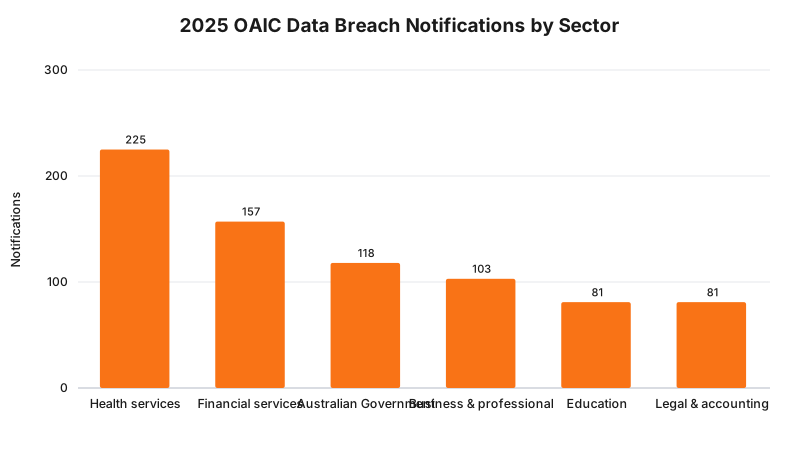
Health service providers reported 225 of the 1,205 total data breach notifications made to the OAIC in the 2025 calendar year, more than any other sector, ahead of financial services on 157 and the Australian Government on 118, according to the OAIC’s 2025 Notifiable Data Breaches statistics. A clinic holding clinical photography sits inside the sector already reporting the most breaches.
What That Means for the Build
Turn the rule into a build checklist and four separate points need attention, because a clinical photo usually passes through more than one of them before it is filed against a patient record.
Turn off device-level cloud backup on anything that captures clinical images. iOS syncs new camera roll photos to iCloud Photos by default, and Android does the same to Google Photos, unless switched off. On any clinic-issued device, and any personal device your policy allows for clinical photography, that toggle needs to be off, ideally enforced through a mobile device management (MDM) profile rather than left for a staff member to remember.
Capture into a managed module, not the general camera app. A photo taken through your practice management platform’s dedicated imaging feature, if it has one, saves directly against the patient record in the vendor’s managed storage. Check the module’s own save-to-camera-roll setting too; several clinical photo apps default that setting to on.
Treat a bolt-on imaging app as its own vendor. A clinic that has correctly mapped and contracted its booking and records platform can still have an untracked overseas recipient if staff separately use a free photo app for treatment images. That app has its own storage region, its own subprocessors, and its own terms, none of which inherit from the platform it sits alongside in the daily workflow.
Strip location metadata, and name the disclosure in your privacy policy. A phone camera commonly embeds GPS coordinates in a photo’s EXIF data by default, a second personal information field riding along inside the file. Separately, APP 1.4(f) requires your collection notice to say whether personal information is likely to be disclosed to overseas recipients and, if practicable, which countries. “We may use third-party service providers” with no country named does not meet that standard once you know which country your imaging vendor actually stores in.
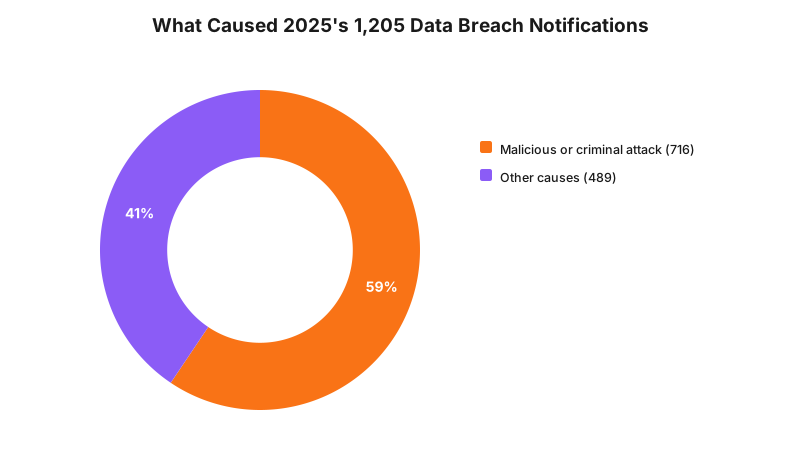
Malicious or criminal attacks caused 716 of the 1,205 notifications the OAIC recorded in 2025, the largest single cause, with the remaining 489 spread across human error and system faults, per the same OAIC 2025 figures cited above. An unsecured storage bucket or an unmanaged app account is exactly the kind of opening that cause category describes.
Where Clinical Photos Actually Land
| Storage location | Where the image typically lives | Overseas recipient? | What reasonable steps looks like here |
|---|---|---|---|
| Staff personal phone, no clinic app | Camera roll, then a personal cloud backup account | Very likely, and outside any clinic vendor agreement | Written policy banning personal-device capture, enforced by an MDM-managed clinic device instead |
| Clinic-issued phone or tablet, general camera app | Device camera roll, backs up if cloud sync is left on | Possible, depends on the account’s cloud settings | Disable device-level cloud photo backup as a standard build step |
| Practice management platform’s built-in imaging module | Vendor’s primary storage, usually described in its Data Processing Addendum | Depends on the platform’s hosting region | Confirm the imaging module’s storage region specifically, not just the platform’s general claim |
| Separate bolt-on clinical imaging app | Its own infrastructure, often a different vendor and country entirely | Frequently yes | Assess and contract it as its own vendor, do not assume it inherits the main platform’s compliance |
A Worked Example
A cosmetic injectables clinic ran its bookings and patient records through a practice management platform with a signed Data Processing Addendum naming Australian data residency. Separately, its nurse injectors used a free tablet app to take before and after treatment photos, because the platform’s own imaging module was awkward mid-treatment. That app synced every photo to a cloud account tied to its US-based developer, with no Data Processing Addendum in place and no mention anywhere in the clinic’s published privacy policy.
The clinic had done the harder part correctly: it had mapped, assessed, and contracted its main vendor. What it missed was a second overseas recipient handling its most sensitive photographic content, adopted informally because it was faster on the day. The fix was to move photo capture back into the booking platform’s own imaging module, already covered by the existing agreement, and set a written device policy naming that as the only approved capture method on clinic devices.
What to Check on Your Own Site
- List every app or device that captures a clinical photograph, not just the platform your booking flow runs on.
- For each one, confirm whether device-level cloud photo backup is switched on, and turn it off if your clinic did not deliberately choose to allow it.
- Ask your imaging vendor, in writing, which country the photos are stored in specifically, since a platform’s general hosting claim does not always cover a bolt-on imaging feature.
- Check whether your privacy policy names offshore photo disclosure at all, and whether the country it names matches what your vendor actually confirmed.
- Confirm whether EXIF location data is stripped before a clinical photo is stored or transmitted anywhere.
- Set a written policy on personal-device use for clinical photography, and check it against what staff are actually doing, not what the policy assumes they are doing.
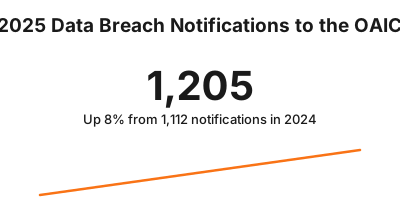
The 1,205 notifications recorded in the 2025 calendar year were an 8 percent rise on the 1,112 recorded in 2024, the highest annual total since the Notifiable Data Breaches scheme began, according to the OAIC’s own reporting.
The Enforcement Anchor
No published OAIC determination names an Australian cosmetic or dental practice for a breach of APP 8 specifically involving clinical photographs. That is worth stating plainly rather than dressing up an unrelated case as a precedent it is not.
What is documented, and directly on point, is a 2020 international incident showing exactly this failure mode. In January 2020, security researchers found an unsecured Amazon Web Services storage bucket run by NextMotion, a French medical imaging vendor used by aesthetic and plastic surgery clinics, exposed with no authentication in place. The bucket held roughly 900,000 files, including facial and body treatment photos, video scans, consultation notes, and invoices, drawn from 170 clinics across 35 countries. Researchers reported the exposure on 24 January 2020, and the vendor closed it by 5 February 2020, according to both vpnMentor’s original disclosure report and BleepingComputer’s independent coverage. Nothing in either report ties the exposure to an Australian clinic, and it should not be read as one. What it shows is that a clinical imaging vendor’s unsecured cloud storage is not a hypothetical risk. It has already happened, at scale, to the exact category of software a cosmetic clinic uses to store the exact category of photo this guide is about.
Where This Gets Hard
Confirming a vendor’s own storage region is one thing. Confirming what its subcontractors do is another, and a clinic has no practical way to monitor that on an ongoing basis. A bolt-on imaging app can change its cloud provider or add a support subcontractor without telling its customers, and the only real control available to a small clinic is a contract clause requiring notice of that change, which most standard-form app terms do not include.
Photographic consent and retention requirements are a separate question from the privacy analysis in this guide, and depend on which professional guideline governs the practitioner taking the photo. AHPRA’s Guidelines for registered health practitioners who perform non-surgical cosmetic procedures, in effect since September 2025, cover every registered health practitioner except medical practitioners, who instead sit under the Medical Board’s own 2023 cosmetic guidelines. Which document applies to your practitioners determines where to check the photography and consent requirements, separately from where the photo is allowed to be stored once it exists.
The regulator says a clinic must take reasonable steps before disclosing a patient’s photograph to an overseas recipient and stays accountable for what that recipient does with it afterwards; the build consequence is that every app and platform touching a clinical photo needs a documented storage region and a written agreement, not an assumption that it inherits compliance from whatever platform it sits next to; whether your specific vendor arrangement satisfies APP 8 in your circumstances is a question for your medical defence organisation or your lawyer.
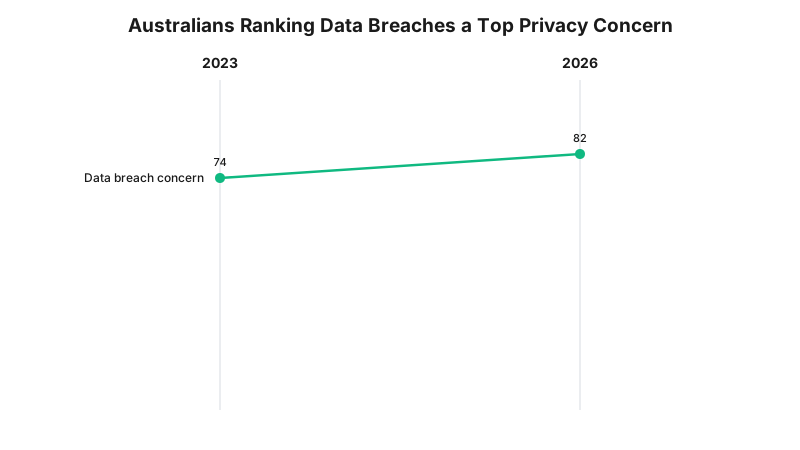
The share of Australians ranking data breaches among their top privacy concerns rose from 74 percent in 2023 to 82 percent in 2026, according to the OAIC’s Australian Community Attitudes to Privacy Survey findings cited alongside its 2025 breach statistics. A patient asking where their treatment photos are stored is no longer an unusual question to be asked in reception.
Status
In force. APP 8 and section 16C have applied since the current Australian Privacy Principles commenced on 12 March 2014, and health service providers have been covered by the Privacy Act regardless of turnover for the same period. Nothing in this guide depends on the proposed, unlegislated removal of the small business exemption for other industries, which as at 24 September 2026 has no passed Bill and no commencement date.
Frequently Asked Questions
Are before and after photos personal information under the Privacy Act?
Yes. A photo that shows a patient’s face or an identifiable part of their body, taken in a clinical setting for treatment purposes, is personal information about that patient. Because it was collected to document a health service, it is also health information, which the Privacy Act treats as sensitive information with a higher bar for collection and disclosure than ordinary personal information.
Does the small business exemption mean a small cosmetic clinic can ignore this?
No. Health service providers are covered by the Privacy Act regardless of annual turnover, so the general small business exemption never applied to a clinic collecting clinical photographs in the first place. This is separate from, and should not be confused with, the proposed removal of the small business exemption for other industries, which has not been legislated as at September 2026.
Is it illegal to store clinical photos on a staff member’s personal phone?
The Privacy Act does not name personal phones specifically, but a photo saved to a personal device that then backs up to that person’s private cloud account is a disclosure your clinic almost certainly cannot assess, contract, or audit. That gap is the practical problem, whether or not a specific clause says the word phone.
If a cloud photo vendor says the images are de-identified, does APP 8 still apply?
A facial or body photograph is very hard to genuinely de-identify while still being useful for treatment comparison, since the image itself is often the identifying feature. Unless a vendor can explain exactly what de-identification method it applies and demonstrate the photo can no longer reasonably identify the patient, treat the claim as marketing language and assess the disclosure under APP 8 as you would any other identifiable clinical photo.
Find Out Where Your Clinic’s Photos Actually Go
Get in touch with RockingWeb to review every integration touching your booking flow and patient records, including the apps and platforms handling clinical images, and get a written list of which ones disclose data overseas and where the documentation is missing.
Sources
- OAIC - APP Guidelines Chapter 8: Cross-border disclosure of personal information, October 2025, v1.3. Checked 24 September 2026.
- OAIC - Data breach notifications increase to all-time high in 2025, new NDB stats show, including 2025 Australian Community Attitudes to Privacy Survey figures. Checked 24 September 2026.
- vpnMentor - Report: NextMotion data leak exposing plastic surgery patient files. Checked 24 September 2026.
- BleepingComputer - Plastic surgery patient photos, info exposed by leaky database. Checked 24 September 2026.
- AHPRA - New guidelines for cosmetic procedures, 2 September 2025. Checked 24 September 2026.
- Medical Board of Australia - Guidelines for registered medical practitioners who perform cosmetic surgery and procedures, date of issue 1 July 2023. Checked 24 September 2026.
Last reviewed: 24 September 2026.
Vikas Thakur
Founder of RockingWeb. 16 years of experience from working at TPG, iiNet and Monadelphous, now building websites, software and digital marketing for local businesses in Rockingham and Perth.