

Cosmetic Injectables Australia: $4.6B Market Revealed
Australia's facial injectable market hit US$3.1B (A$4.6B) in 2024 and is forecast to reach US$9.08B by 2030, according to Grand View Research. Here is the full data breakdown and what it means for clinic marketing.
 Vikas Thakur 5 min read
Key Takeaways
- Australia’s facial injectable market was worth US$3.1 billion (A$4.6 billion) in 2024, according to Grand View Research
- The market is forecast to hit US$9.08 billion by 2030, a 19.3% CAGR from 2024
- The market grew from US$2.7 billion in 2023 to US$3.1 billion in 2024, a jump of roughly 15% in a single year
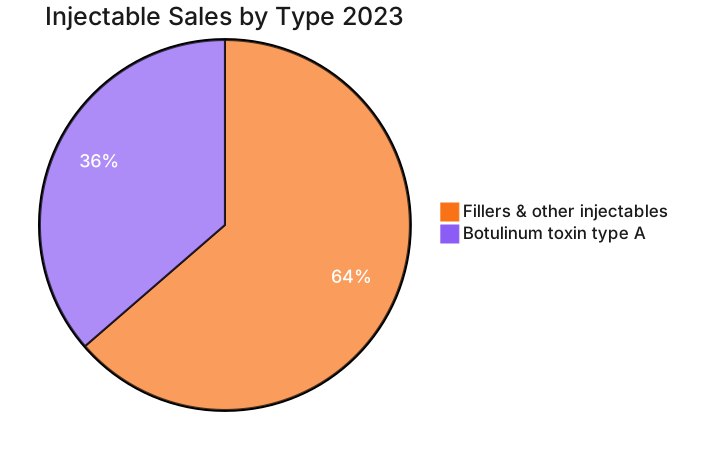
- Botulinum toxin type A (Botox and equivalents) accounted for 36.36% of total injectable sales in 2023
- National spend on non-surgical cosmetic procedures first topped $1 billion a year as far back as 2016 (CPCA), and the market has roughly tripled since
- Dermal filler spend grew at least 25% and anti-wrinkle injection spend grew at least 14% year-on-year in the CPCA’s benchmark report
- AHPRA’s September 2025 advertising overhaul now caps non-compliant ads at $60,000–$120,000 per breach, directly touching every clinic selling into this market
Australia’s facial injectable market is worth US$3.1 billion, or roughly A$4.6 billion, as of 2024. That is according to Grand View Research’s 2024–2030 forecast, which puts the market on track to reach US$9.08 billion by the end of the decade. A market growing at 19.3% a year is not a niche anymore.
Here is the problem. Most of the clinics competing for that spend are still marketing the way they did in 2020. Testimonials on the homepage. Before-and-after galleries on Instagram. Brand names for Schedule 4 substances splashed across Google Ads. Every one of those now carries a $60,000–$120,000 penalty per breach under AHPRA’s 2025 guidelines.
The market is bigger than ever. The rules for winning a share of it just got a lot stricter. Below is the full data picture, plus what it means for how a clinic markets itself in 2026.
How Big Is the Australian Injectables Market, Really
Market-sizing reports vary depending on scope (facial injectables vs. the broader medical aesthetics category), but Grand View Research’s facial injectable market data is the most cited Australia-specific figure and tracks closely with industry association reporting.
| Year | Market Size (USD) | Approx. AUD | Source |
|---|---|---|---|
| 2023 | $2.7 billion | ~$4.0 billion | Grand View Research |
| 2024 | $3.1 billion | ~$4.6 billion | Grand View Research |
| 2030 (forecast) | $9.08 billion | ~$13.4 billion | Grand View Research |
CAGR 2024–2030: 19.3%
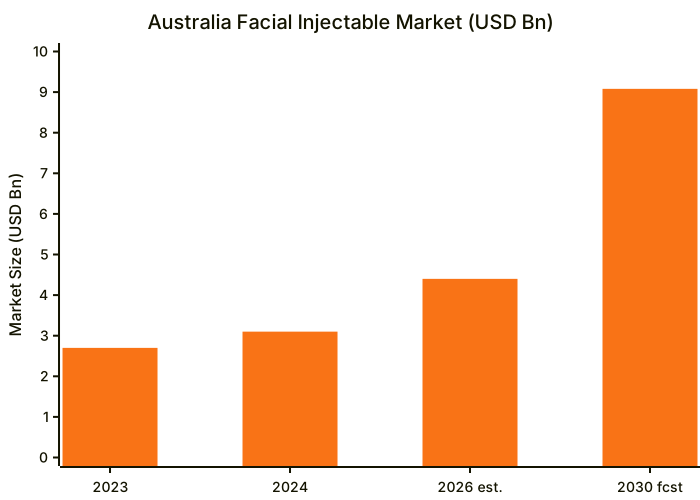
A one-year jump from $2.7 billion to $3.1 billion, roughly 15%, is a faster growth rate than most consumer retail categories in Australia. The market is not slowing down. It is compounding.
Takeaway: the injectables market added almost a full year of 2023 revenue growth in just twelve months, and the 2030 forecast implies it will nearly triple from here.
Botox Still Dominates, But the Market Is Diversifying
Botulinum toxin type A, the active ingredient in Botox, Dysport, and similar products, accounted for 36.36% of total injectable sales in Australia in 2023. That leaves almost two-thirds of the market split across dermal fillers, skin boosters, thread lifts, and newer categories like fat-dissolving injectables.
The CPCA’s benchmark report on cosmetic treatment spending recorded dermal filler revenue growing at least 25% year-on-year, against 14% for anti-wrinkle injections in the same period. Fillers are growing faster off a smaller base. That shift matters for clinics deciding where to put marketing budget: the fastest-growing sub-category isn’t the one everyone already searches for by brand name.
Takeaway: Botox is the anchor product, but dermal fillers are the growth product, and marketing spend that assumes “Botox = the whole market” is under-investing in the faster-growing half.
What This Means for Clinic Marketing in 2026
A market this size, growing this fast, would normally mean an arms race on paid ads and influencer partnerships. AHPRA’s 2025 guidelines rule that out. Testimonials, before-and-after photography, and Schedule 4 brand names are banned outright from clinic advertising, on every channel from Google Ads to clinic signage.
That leaves clinics with a narrower, more technical path: educational content, clinically-worded outcome descriptions, and pricing transparency, delivered through a website architecture that is compliant by design rather than compliant by accident. Most clinic websites built before September 2025 are not compliant with the current rules, even if they were compliant when they were built.
If you are not sure where your own site sits against the current guidelines, RockingWeb’s free AHPRA website compliance audit checks your site against the 2025 rules and flags exactly what needs to change before your next ad spend or Google review.
Takeaway: the market is expanding faster than the compliance rules, which means the clinics that solve for both at once, growth and compliance, will take share from the ones still running 2020-style marketing.
Building a Compliant Website for a Growing Market
Growing into a $9 billion market by 2030 requires a website that can carry paid traffic, organic search, and referral visits without a single non-compliant page costing $60,000 to $120,000. That is a different build brief than a generic clinic website template.
RockingWeb designs and rebuilds cosmetic clinic websites around AHPRA and TGA compliance from the first wireframe, so clinics scaling into this market are not retrofitting compliance after the fact.
Data sources: Grand View Research, Australia Facial Injectable Market Size & Share Report 2030; Cosmetic Physicians College of Australasia (CPCA) cosmetic treatment spending report; AHPRA, Guidelines for advertising a regulated health service (September 2025).
RockingWeb builds AHPRA-compliant websites for Australian cosmetic clinics. Get a free compliance audit or contact us to discuss a compliant rebuild.
Vikas Thakur
Founder of RockingWeb. 16 years building for companies like TPG, iiNet and Monadelphous, now focused on websites and marketing that comply with AHPRA's advertising guidelines and still book patients.

![7 Million Aussies Want Cosmetic Surgery: Demand Data [2026]](/assets/medical-skincare-clinic-marketing-australia-DbG0v4jA.png)
![Anti-Wrinkle Injection Statistics Australia [2026 Data]](/assets/cosmetic-clinic-patient-acquisition-cost-2025-BuwVsmfm.png)
![How Many Cosmetic Procedures Australia Performs Yearly [2026]](/assets/cosmetic-clinic-patient-retention-CmO369h2.png)