7 Million Aussies Want Cosmetic Surgery: Demand Data [2026]
Almost 7 million Australians, 38% of adults, are considering a cosmetic procedure in the next decade, according to the ACCSM's 2023 national survey. Here's who they are, what's driving the decision, and where demand is highest.
 Vikas Thakur Founder, RockingWeb 8 min read
Key Takeaways
- Almost 7 million Australians (38% of adults) are considering a cosmetic procedure in the next decade, according to the Australasian College of Cosmetic Surgery and Medicine’s (ACCSM) 2023 national survey
- 59% of Millennials (aged 23 to 42) say they’re considering surgery, against 45% of Gen X and just 28% of Baby Boomers
- 22% of Millennials have already had a cosmetic procedure, the highest rate of any generation
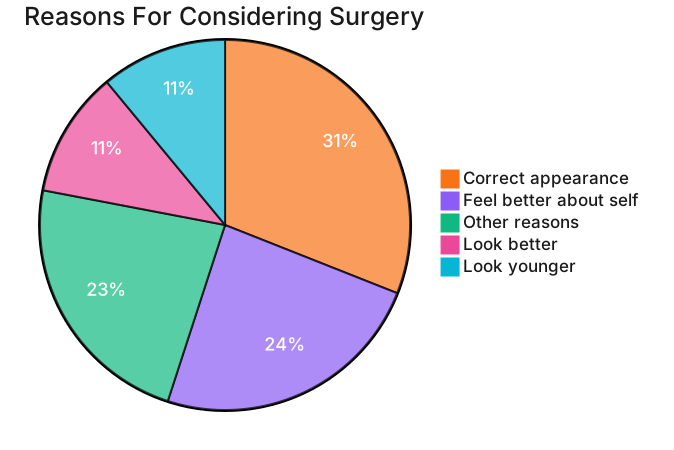
- 31% of respondents considering future surgery cite correcting their appearance after an injury or health issue as the reason, ahead of self-esteem (24%) and looking younger (11%)
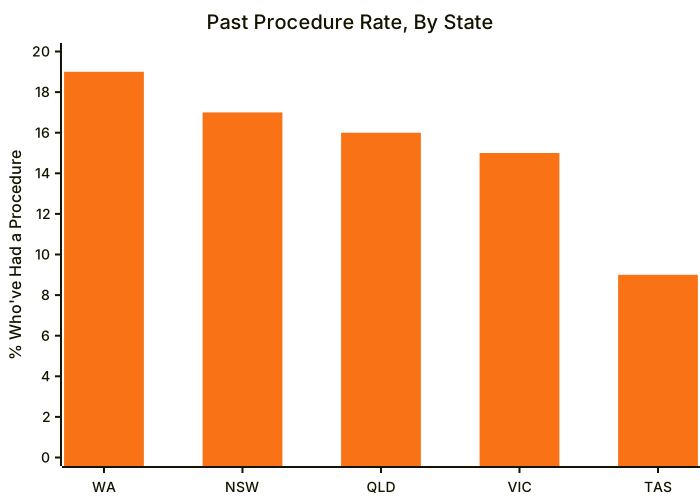
- Western Australia has the highest rate of past cosmetic procedures at 19%, ahead of NSW (17%) and Queensland (16%)
- When choosing whether to proceed, 39% of respondents rank safety, security and hygiene as the single most important factor, well ahead of affordability at just 7%
- Women lean toward body procedures (breast work at 31%, liposuction at 14%), men lean toward facial work (facelifts at 36%, rhinoplasty at 29%)
Almost 7 million Australians, 38% of the adult population, are considering a cosmetic procedure in the next decade. That figure comes from the ACCSM’s 2023 national survey, and it’s the number every clinic marketer quotes. Fewer people ask the more useful question: who are these 7 million people, and why haven’t they booked yet?
The answer isn’t evenly spread across age, gender or postcode. Millennials are driving demand at more than double the rate of Baby Boomers. Most people considering a procedure aren’t chasing vanity, they’re trying to correct something or feel better in their own skin. And the thing stopping them isn’t usually cost, it’s trust.
This piece breaks down the demand side of the market: who’s considering it, what’s motivating them, what’s holding them back, and where in Australia demand runs hottest. For the separate question of how many procedures actually get performed each year, see our companion piece on how many cosmetic procedures Australia performs yearly.
Who’s Actually Considering Cosmetic Surgery
Age is the single biggest predictor of whether someone is weighing up a cosmetic procedure. The ACCSM survey found Millennials, defined as adults aged 23 to 42, are considering surgery at more than double the rate of Baby Boomers.
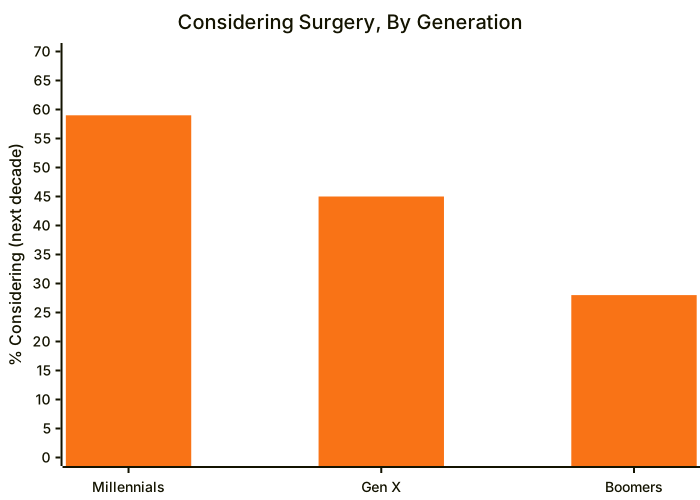
Millennials aren’t just thinking about it more, they’re acting on it more. 22% of Millennials say they’ve already had a cosmetic procedure done, the highest of any generation, and 34% say they’d be willing to travel overseas to get one. Gen X, aged 43 to 58, considers surgery at 45%, with facelifts as their most-requested procedure at 25%, a generation more focused on looking younger than on correcting something specific. Baby Boomers sit lowest at 28% considering, but they’re the most satisfied group once they’ve had work done, with 50% reporting they’re highly satisfied against 41% for the population overall.
Takeaway: demand isn’t a single mass of “Australians interested in cosmetic surgery”. It’s three distinct generations with different appetites, different procedures in mind, and different reasons for going ahead.
What’s Actually Driving the Decision
Clinic marketing tends to assume patients are chasing an ideal look, influenced by social media or celebrity culture. The ACCSM’s own breakdown of motivations tells a different story. Among people considering future surgery, 31% say their main reason is correcting their appearance after an injury or health issue, not general aesthetic improvement. A further 24% cite wanting to feel better about themselves, with looking better (11%) and looking younger (11%) trailing behind. Almost nobody, in the survey’s own words, cites wanting to look like a celebrity.
That’s a meaningfully different buyer than the one most clinic websites are written for. A patient motivated by correcting a health-related issue wants clinical reassurance and a clear explanation of the procedure, not a gallery of aspirational before-and-after photos, which AHPRA’s advertising rules now restrict anyway. For the volume of procedures this demand actually converts into each year, our cosmetic procedure count breakdown covers surgical versus non-surgical splits in full.
Takeaway: most people considering a procedure are trying to fix something or feel normal again, not chase a trend, which changes what a clinic’s website needs to say to convert them.
Gender Splits: What Men and Women Actually Choose
The type of procedure someone is weighing up also splits sharply by gender. Women in the ACCSM survey lean toward body-focused work: breast procedures at 31%, liposuction at 14%, and tummy tucks at 10%. Men lean toward facial work: facelifts at 36%, rhinoplasty at 29%, and eyelifts at 24%.
| Procedure category | Women | Men |
|---|---|---|
| Breast procedures | 31% | N/A |
| Facelifts | N/A | 36% |
| Rhinoplasty | N/A | 29% |
| Eyelifts | N/A | 24% |
| Liposuction | 14% | N/A |
| Tummy tucks | 10% | N/A |
| Satisfaction with outcome | 88% | 85% |
Satisfaction runs high for both, 88% of women and 85% of men report being happy with the outcome. That’s a useful data point for clinics worried that cosmetic work carries reputational risk: the overwhelming majority of patients who go through with it are glad they did.
Takeaway: a clinic website built around one generic “before and after” narrative is talking past half its potential patients. Men and women are booking for different procedures, for different reasons.
Where Demand Is Highest, State By State
Geography matters more than most clinic owners assume. Western Australia has the highest rate of Australians who’ve already had a cosmetic procedure, at 19%, ahead of NSW (17%), Queensland (16%) and Victoria (15%). Tasmania sits lowest among the states reported, at 9%.
The ACCSM survey’s future-intent figures point to a similar pattern in reverse, with the ACT and Tasmania showing the highest share of adults considering surgery in the next decade. That’s a single-source figure though, drawn only from the ACCSM’s own release with no independent state-level survey to cross-check it against, so treat it as directional rather than exact. Western Australia’s 19% past-procedure rate, by contrast, is corroborated across multiple independent write-ups of the same underlying data and is a safer number to plan a local market around.
Takeaway: a Perth or WA-based cosmetic clinic is competing in the state with Australia’s highest historical uptake rate, which means more competition, but also a larger pool of patients who’ve already proven they’ll say yes to the category.
What’s Actually Holding People Back
If cost were the main barrier, clinic marketing built around discounts and payment plans would already be converting this 7 million-strong pool. It isn’t the biggest factor. When the ACCSM asked what matters most when choosing whether to proceed, 39% ranked safety, security and hygiene as their top concern, ahead of wanting an accredited or qualified practitioner (29%). Affordability came in at just 7%, behind understanding the procedure and its risks (12%).
The same pattern shows up in how people pick a surgeon in the first place: 37% rely on a medical recommendation, 28% go on word of mouth, and only 20% check former patient reviews first. Cost and website quality barely register as selection criteria on their own.
That data lines up with the direction of Australia’s regulatory settings. AHPRA’s cosmetic surgery reforms, which introduced new accreditation standards from July 2023 and tightened advertising rules further in September 2025, exist because safety and credentials are exactly what patients say they care about most. A clinic that can’t demonstrate its practitioners are properly accredited and its marketing is compliant is failing the test patients themselves say matters. Breaching those advertising rules carries penalties of up to $60,000 for an individual and $120,000 for a body corporate per offence, so getting it wrong isn’t just a lost patient, it’s a regulatory risk.
If you’re not certain your site clears the current bar, get in touch with RockingWeb and we’ll check it against the 2025 guidelines and flag exactly what to fix.
Takeaway: the barrier isn’t price, it’s proof. Patients are holding back until they trust the practitioner and the process, not until a discount shows up in their inbox.
What This Means for Clinics Competing for This Demand
Seven million Australians considering a procedure is a demand pool most industries would kill for. The clinics winning that demand aren’t the ones with the flashiest before-and-after gallery, they’re the ones whose websites answer the questions patients are actually asking: is this practitioner qualified, is this safe, and will this fix what I’m dealing with.
We build AHPRA and TGA-compliant cosmetic clinic websites designed around exactly that patient psychology, and our ClinicPipeline service runs the ongoing marketing engine that turns compliant content into booked consultations. Visit rockingweb.com.au to see the full range of work.
Takeaway: the demand data hasn’t changed in years, Millennials lead, safety beats price, and most patients want something corrected rather than transformed. The clinics that build their marketing around that reality are the ones converting the 7 million.
Data sources: Australasian College of Cosmetic Surgery and Medicine (ACCSM), national cosmetic surgery survey (June 2023); Australian Health Practitioner Regulation Agency (AHPRA), National Law penalty provisions and Guidelines for advertising a regulated health service (September 2025).
RockingWeb builds AHPRA-compliant websites for Australian cosmetic clinics. Contact us to discuss your clinic’s website and marketing.
Vikas Thakur
Founder of RockingWeb. 16 years building for companies like TPG, iiNet and Monadelphous, now focused on websites and marketing that comply with AHPRA's advertising guidelines and still book patients.
![Anti-Wrinkle Injection Statistics Australia [2026 Data]](/assets/cosmetic-clinic-patient-acquisition-cost-2025-BuwVsmfm.png)

![How Many Cosmetic Procedures Australia Performs Yearly [2026]](/assets/cosmetic-clinic-patient-retention-CmO369h2.png)
![Cosmetic Surgery Statistics Australia: $1.9B Market [2026]](/assets/cosmetic-clinic-google-ads-benchmarks-BgYUtpAe.png)