Men's Cosmetic Procedures Grew 6.3% as Women's Fell 3.9% in 2024
Men's share of cosmetic procedures grew 6.3% worldwide in 2024 while women's fell 3.9%, according to ISAPS's survey of 2,975 surgeons across 32 countries. Women still account for 84.0% of all procedures. Australia performed 177,502 procedures that year, but no dataset breaks that figure down by patient age or gender.
 Vikas Thakur Founder, RockingWeb 8 min read
Key Takeaways
- Men’s cosmetic procedures grew 6.3% worldwide in 2024, while women’s fell 3.9%, according to ISAPS’s 2024 Global Survey
- Women still account for 84.0% of all cosmetic procedures worldwide, 31,890,477 of the 37,951,364 counted in 2024
- Australia performed 177,502 cosmetic procedures in 2024: 114,188 surgical and 63,315 non-surgical
- No dataset publishes an Australia-specific breakdown of cosmetic patients by age or gender. ISAPS only reports these splits at a global level
- Globally, 60.1% of rhinoplasty patients are aged 18 to 34, the youngest skew of any major procedure tracked
- Botulinum toxin patients skew oldest: 47.1% are aged 35 to 50 and a further 23.6% are 51 to 64
- Australia’s most-performed cosmetic procedure in 2024 was botulinum toxin at 26,775 cases, ahead of hyaluronic acid filler at 25,148
- Australia has 525 board-certified plastic surgeons, ranking 23rd worldwide by surgeon count
Men’s share of cosmetic procedures grew 6.3% worldwide in 2024, while women’s fell 3.9%, according to ISAPS’s Global Survey on Aesthetic/Cosmetic Procedures, built from data submitted by 2,975 plastic surgeons across 32 countries. Women still perform the overwhelming majority of the total: 84.0% of the 37,951,364 procedures counted worldwide in 2024. That is the headline swing in a market most people assume barely moves year to year.
Here is the catch for anyone searching for cosmetic surgery demographics in Australia specifically: no dataset breaks these age or gender figures down by country. ISAPS reports Australia’s own procedure volume, 177,502 in 2024, but not who those patients were. This piece reports the closest verifiable numbers on both fronts, the global age and gender splits ISAPS does publish, and exactly what Australia’s own procedure count looks like by treatment type. Then it covers what the gap means for how a clinic builds its website and pricing pages.
Who’s Getting Cosmetic Procedures, Worldwide
ISAPS’s 2024 survey, built from its largest respondent pool in recent years, found women accounted for 31,890,477 of the 37,951,364 total procedures worldwide, 84.0%. Men accounted for the remaining 6,060,887, or 16.0%. That split holds almost identically whether you look at surgical work alone (83.9% women, 16.1% men) or non-surgical work alone (84.2% women, 15.8% men). Gender balance in this market does not shift much by procedure category. It has stayed close to four-to-one for years.
What did shift in 2024 was direction. Total procedures performed on women fell 3.9% compared with 2023, while procedures performed on men rose 6.3% over the same period. Liposuction remained the most common surgical procedure for women, followed by eyelid surgery and breast augmentation. Eyelid surgery was the most common surgical procedure for men, followed by gynecomastia surgery and scar revision, a different top three from the women’s list.
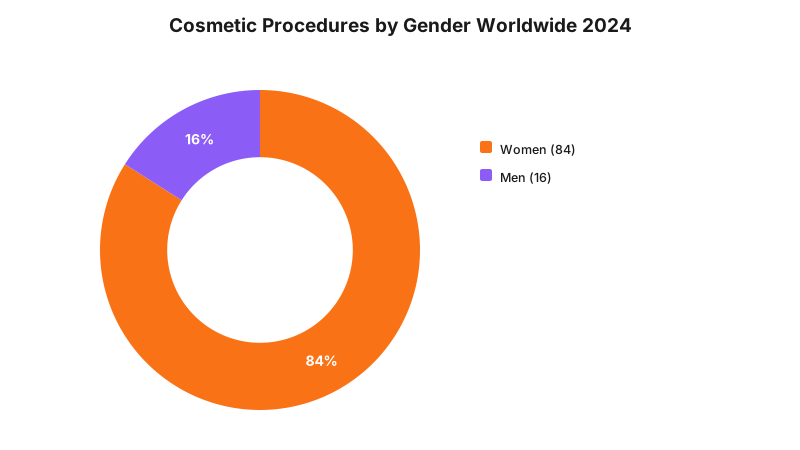
Takeaway: women still make up roughly four in five cosmetic patients worldwide, but a clinic assuming that ratio is fixed is behind the 2024 data. Male demand is growing while female demand contracted.
Age Follows the Procedure, Not the Patient
There is no single “cosmetic surgery age” globally. ISAPS’s patient-age data, broken out by procedure rather than by patient overall, shows each treatment type pulls from a distinct age band.
| Procedure | 18 to 34 | 35 to 50 | 51 and older |
|---|---|---|---|
| Rhinoplasty | 60.1% | 29.0% | 6.7% |
| Breast augmentation | 54.0% | 37.4% | 7.8% |
| External genital surgery | 48.4% | 40.5% | 9.2% |
| Liposuction | 42.7% | 43.2% | 13.0% |
| Botulinum toxin | 22.8% | 47.1% | 29.6% |
Rhinoplasty skews youngest by a wide margin, 60.1% of patients are 18 to 34. Botulinum toxin sits at the opposite end: only 22.8% of patients are in that same bracket, while 29.6% are 51 or older. Liposuction is the most evenly spread procedure of the five, splitting almost down the middle between the 18 to 34 and 35 to 50 bands.
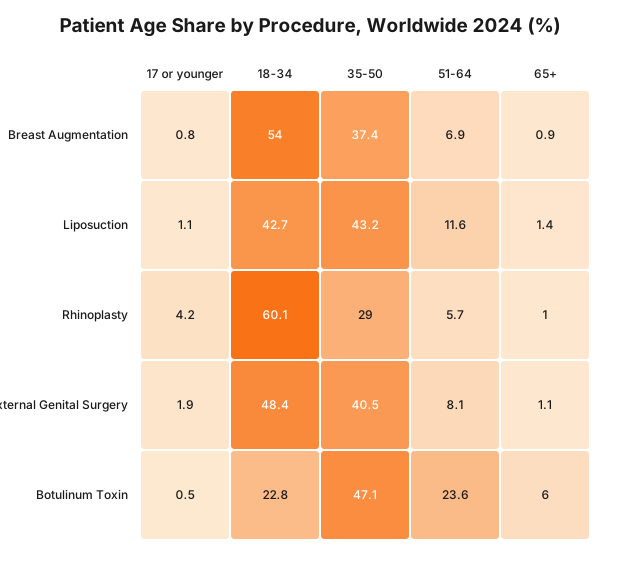
Takeaway: treating “the cosmetic patient” as one persona misreads the market. A rhinoplasty enquiry and a botulinum toxin enquiry are, on average, coming from patients roughly a decade or more apart in age.
Australia’s Own Numbers: What We Can (and Can’t) Verify
Australia’s board-certified plastic surgeons performed 177,502 cosmetic procedures in 2024, according to ISAPS, split into 114,188 surgical and 63,315 non-surgical cases. That figure comes from 525 ISAPS-counted plastic surgeons in Australia, which ranks the country 23rd worldwide by surgeon count and 0.9% of the estimated 58,500 plastic surgeons globally.
What ISAPS does not publish is an Australia-specific age or gender split. The survey’s demographic tables (gender distribution, patient age by procedure) are reported worldwide only, not disaggregated by the 32 individual countries and territories in the dataset. That’s a genuine gap, not an oversight on our part, and it’s worth saying plainly rather than pretending a country-level number exists when it doesn’t.
What Australia’s data does show clearly is which procedures get performed here. Botulinum toxin led at 26,775 cases, followed by hyaluronic acid filler at 25,148, then breast augmentation (14,123), scar revision (11,025), and eyelid surgery (10,920).
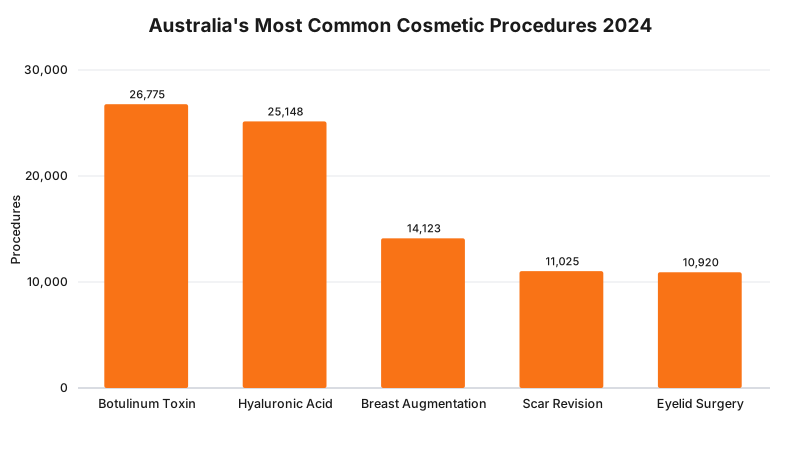
Takeaway: Australia’s procedure mix is verifiable and injectables-led. Its patient demographics, beyond that, are not published anywhere at country level, so treat the global age and gender splits above as the closest available proxy, not an Australian statistic.
What This Means for Your Clinic’s Website
The five procedures Australia performs most, botulinum toxin, hyaluronic acid filler, breast augmentation, scar revision, and eyelid surgery, are the ones with enough enquiry volume to justify their own dedicated landing pages rather than a shared “treatments” page. A generic page competes for a generic search term. A dedicated page for the exact procedure a patient is already searching for converts better and ranks for a narrower, higher-intent keyword.
The age data changes how those pages should read, not just what they say. A rhinoplasty page is talking to a patient more likely to be in their twenties, researching on a phone, comparing options across several clinics before booking a consultation. A botulinum toxin page is more often talking to a patient in their late thirties to fifties who already knows the treatment and is choosing a provider on trust and convenience, not education.
Pricing pages sit inside this same logic. A clinic that publishes clear pricing tends to filter for higher-quality enquiries, patients who already know roughly what they’re budgeting for before they call. Whatever a clinic decides to publish about cost still has to sit inside AHPRA’s advertising rules for regulated health services, which is exactly the kind of thing worth checking before a price list goes live. RockingWeb reviews a site’s existing content, including pricing pages, against the current rules.
For clinics building or rebuilding around this kind of procedure-level and demographic targeting, RockingWeb designs AHPRA and TGA-compliant cosmetic clinic websites with dedicated pages structured around exactly the treatments driving real enquiry volume.
Takeaway: the procedures with the most volume and the widest age spread are the ones that most need a dedicated, correctly targeted page, not a shared catch-all.
FAQ
Does any dataset break down cosmetic surgery patients in Australia by age or gender?
No. ISAPS’s Global Survey on Aesthetic/Cosmetic Procedures reports Australia’s total procedure volume, 177,502 in 2024, but only publishes age and gender splits at the worldwide level, not by country. The closest verifiable figures for what an Australian patient profile might look like are the global splits, 84.0% of procedures worldwide go to women, and age skews heavily by procedure type.
What percentage of cosmetic procedures worldwide are performed on women?
84.0% in 2024, according to ISAPS, based on data from 2,975 plastic surgeons across 32 countries. Men accounted for the remaining 16.0%, though male procedure volume grew 6.3% year on year while women’s fell 3.9%.
Which cosmetic procedures skew youngest and oldest by patient age, globally?
Rhinoplasty skews youngest. 60.1% of patients are aged 18 to 34, per ISAPS’s 2024 data. Botulinum toxin skews oldest, with 47.1% of patients aged 35 to 50 and a further 23.6% aged 51 to 64.
How many cosmetic procedures does Australia perform each year, and which are most common?
Australia’s board-certified plastic surgeons performed 177,502 procedures in 2024, according to ISAPS. Botulinum toxin (26,775 cases) and hyaluronic acid filler (25,148 cases) were the two most common, ahead of breast augmentation, scar revision, and eyelid surgery.
Build a Website Around Your Actual Patient Data
RockingWeb builds AHPRA and TGA-compliant cosmetic clinic websites structured around the treatments and demographics driving enquiries, not a generic template. Talk to us about which of your procedures deserve their own page.
Talk to us about your clinic’s website
Sources and References
ISAPS - 2024 Global Survey on Aesthetic/Cosmetic Procedures, full report: worldwide and Australia procedure counts, gender distribution tables, and patient age tables cited throughout this post
ISAPS - press release, 19 June 2025: summarises headline findings from the same 2024 survey, including the gender-specific top surgical procedures and patient age splits cited in this post
How Many Cosmetic Procedures Australia Performs Yearly: companion piece using the same ISAPS dataset for Australia’s procedure-type breakdown
Related reading:
- Cosmetic Surgery Statistics Australia: market size and generational demand data
- 7 Million Aussies Want Cosmetic Surgery: ACCSM survey data on who is considering a procedure and why
- Cosmetic Clinic Websites: compliant website builds for AHPRA-regulated clinics
Vikas Thakur
Founder of RockingWeb. 16 years building for companies like TPG, iiNet and Monadelphous, now focused on websites and marketing that comply with AHPRA's advertising guidelines and still book patients.

![Dentures Cost Australia: Full vs Partial Price Data [2026]](/assets/ahpra-social-media-rules-cosmetic-clinics-LFCez6qC.png)
![7 Million Aussies Want Cosmetic Surgery: Demand Data [2026]](/assets/medical-skincare-clinic-marketing-australia-DbG0v4jA.png)
![How Many Cosmetic Procedures Australia Performs Yearly [2026]](/assets/cosmetic-clinic-patient-retention-CmO369h2.png)
![Cosmetic Surgery Statistics Australia: $1.9B Market [2026]](/assets/cosmetic-clinic-google-ads-benchmarks-BgYUtpAe.png)