Cosmetic Clinic Revenue Benchmark: No Official AU Figure
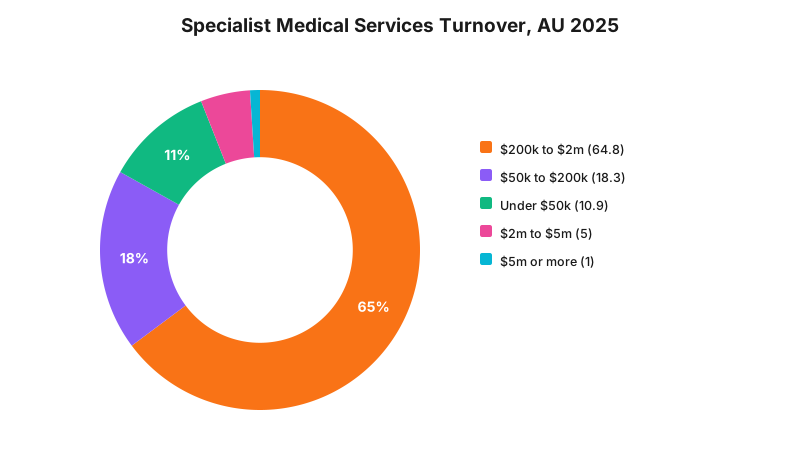
No Australian regulator or ABS collection publishes cosmetic clinic revenue as its own category. The closest verified benchmark is ABS data on Specialist Medical Services, the class that houses cosmetic and plastic surgeons, where 64.8% of 24,365 businesses turned over $200,000 to $2 million in the year to June 2025.
 Vikas Thakur Founder, RockingWeb 8 min read
On this page 9
- Key takeaways
- Why No One Publishes Cosmetic Clinic Revenue
- The Closest Verified Benchmark: Specialist Medical Services Turnover
- Where the Growth Is Actually Happening
- Why the Two ANZSIC Classes Tell Different Stories
- What This Means for Your Clinic’s Website
- FAQ
- Get Your Clinic’s Website Built for the Real Market
- Sources and References
Key takeaways
- No ABS collection or AHPRA dataset publishes cosmetic clinic revenue as its own category. The closest proxy is ANZSIC class 8512, Specialist Medical Services
- 64.8% of Australia’s 24,365 Specialist Medical Services businesses turned over $200,000 to $2 million in the year to 30 June 2025
- Only 5.9% of those businesses cleared $2 million in annual turnover
- 10.9% of businesses in this class turned over less than $50,000, consistent with solo or part-time practice
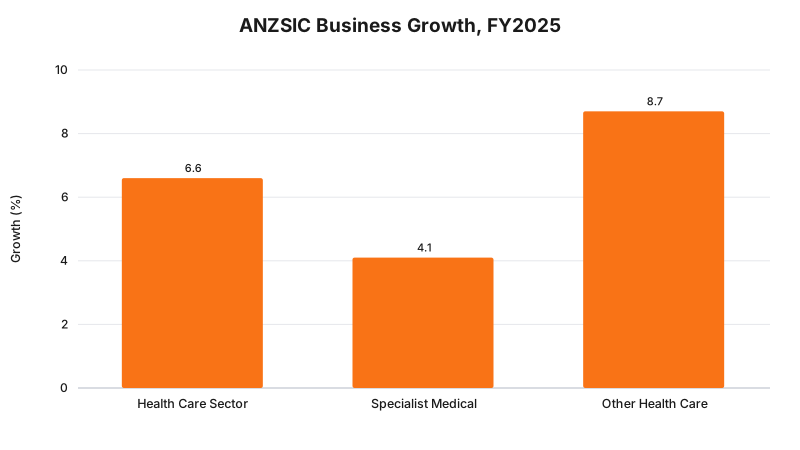
- Specialist Medical Services business numbers grew 4.1% in FY2025 (23,406 to 24,365), slower than the 6.6% growth across the whole Health Care and Social Assistance sector (199,996 to 213,177 businesses)
- Other Health Care Services n.e.c., a smaller ANZSIC class some free-standing procedure clinics fall into, grew 8.7% in the same year, more than double the specialist rate
- That smaller class skews toward lower turnover too: 36.9% sit in the $50,000 to $200,000 band, against 18.3% for Specialist Medical Services
No Australian regulator or ABS collection reports “cosmetic clinic revenue” as its own line item, so any number claiming to be one is a substitute for something else. The closest verified benchmark: 64.8% of the 24,365 Specialist Medical Services businesses in Australia turned over between $200,000 and $2 million in the year to 30 June 2025. That class is the ANZSIC home for cosmetic and plastic surgeons, but it also holds every cardiologist, ophthalmologist and other medical specialist in the country. This guide breaks down what the ABS actually measures, how two classifications tell two different growth stories, and what the mid-size turnover pattern means for a clinic’s website.
Why No One Publishes Cosmetic Clinic Revenue
The Australian and New Zealand Standard Industrial Classification has no code for “cosmetic clinic.” A cosmetic or plastic surgeon in private practice sits inside ANZSIC class 8512, Specialist Medical Services, alongside cardiologists, ophthalmologists, anaesthetists and every other specialist doctor who isn’t a GP. A nurse-led injectables clinic without a specialist doctor may land somewhere else again, inside Other Allied Health Services or Other Health Care Services n.e.c., depending on how it registered.
That mismatch is why headline “cosmetic industry” revenue figures rarely survive a source check. They’re usually a device-market forecast, a procedure-volume estimate, or a global figure repackaged as Australian. RockingWeb’s own market-sizing research hit the same wall counting clinics: no single classification isolates the category (see Cosmetic Clinic Numbers Australia). Revenue data hits the identical ceiling.
Takeaway: treat any “Australian cosmetic clinic revenue” figure without a named ANZSIC class or comparable classification behind it as marketing copy, not data.
The Closest Verified Benchmark: Specialist Medical Services Turnover
The ABS’s Counts of Australian Businesses release, updated 16 December 2025, breaks every ANZSIC class down by annual turnover band. For Specialist Medical Services, the national total at 30 June 2025 was 24,365 businesses.
| Annual Turnover Band | Specialist Medical Services (n=24,365) |
|---|---|
| Under $50,000 | 10.9% (2,648 businesses) |
| $50,000 to $200,000 | 18.3% (4,469 businesses) |
| $200,000 to $2 million | 64.8% (15,799 businesses) |
| $2 million to $5 million | 5.0% (1,207 businesses) |
| $5 million or more | 1.0% (242 businesses) |
Source: Australian Bureau of Statistics, Counts of Australian Businesses, including Entries and Exits, June 2025, businesses by industry class by turnover size range.
Nearly two-thirds of every specialist medical business in the country, cosmetic surgeons included, sits in that $200,000 to $2 million middle band. Only 5.9% clear $2 million. That is a very different picture to the “booming aesthetic industry” framing most market reports lead with: most businesses in this class are single or small-team practices, not multi-site chains.
Takeaway: if a cosmetic clinic’s revenue benchmark matters to your budgeting, plan around the $200,000 to $2 million band as the realistic middle of the market, not the multi-million-dollar chain examples that dominate marketing case studies.
Where the Growth Is Actually Happening
Business counts, not just turnover bands, tell a second part of the story. Specialist Medical Services grew from 23,406 businesses to 24,365 over FY2025, a 4.1% increase, slower than the 6.6% growth across the whole Health Care and Social Assistance division, which reached 213,177 businesses.
| ANZSIC Class | 1 July 2024 | 30 June 2025 | Growth |
|---|---|---|---|
| Health Care and Social Assistance (division) | 199,996 | 213,177 | +6.6% |
| Specialist Medical Services (class 8512) | 23,406 | 24,365 | +4.1% |
| Other Health Care Services n.e.c. (class 8599) | 2,838 | 3,084 | +8.7% |
Source: Australian Bureau of Statistics, Counts of Australian Businesses, including Entries and Exits, June 2025.
Other Health Care Services n.e.c., the ANZSIC catch-all some free-standing procedure clinics fall into when they aren’t run by a registered specialist, grew 8.7% in the same year, more than double the specialist rate. New business formation in the cosmetic and aesthetic space looks like it’s concentrated in that smaller, faster-growing class rather than the traditional specialist-medical one.
Takeaway: the fastest business growth in the ABS data sits in the smaller, less-defined health class, not the specialist-doctor class most cosmetic surgery marketing points to.
Why the Two ANZSIC Classes Tell Different Stories
Specialist Medical Services and Other Health Care Services n.e.c. don’t just grow at different rates. Their turnover mix looks nothing alike.
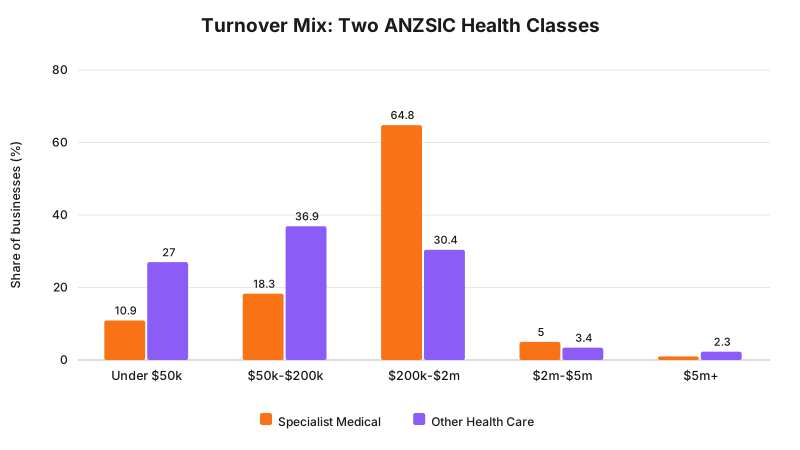
Other Health Care Services n.e.c. skews smaller across the board: 36.9% of its 3,084 businesses sit in the $50,000 to $200,000 band, against 18.3% for Specialist Medical Services, and 27.0% turn over less than $50,000. Whichever class a given cosmetic business actually reports under changes the benchmark considerably, which is the entire reason a single “cosmetic clinic revenue” figure doesn’t exist and shouldn’t be trusted when quoted without its source class attached.
Takeaway: ask which ANZSIC class backs any benchmark you’re handed. The answer changes the number by a factor of two or more.
What This Means for Your Clinic’s Website
A market where most businesses sit in a $200,000 to $2 million band, rather than at the multi-million-dollar chain end, is one where a single extra consultation booking moves the needle in a way it wouldn’t for a large operator. That changes what a clinic website should prioritise. Dedicated landing pages built around the treatments driving the most repeat and referral volume, rather than one generic “our services” page, capture more of the search intent that actually converts.
AHPRA’s advertising guidelines limit what a clinic can say about outcomes, before-and-after results and patient testimonials, so a website can’t lean on the same tactics a retail business would use. Trust has to come from consultation offers, clinician credentials and clearly explained treatment information instead. RockingWeb checks whether an existing site’s claims, imagery and structure sit inside those limits before a redesign or ad spend goes ahead.
For a clinic trying to grow toward the next turnover tier, the website is one of the few controllable levers. RockingWeb builds cosmetic clinic websites around that brief: compliant by default, structured for the highest-intent treatment searches, and built to convert a booking rather than just look presentable.
Takeaway: in a market where most cosmetic-adjacent businesses sit well under $2 million a year, the website’s job is to win the next booking inside AHPRA’s rules, not to chase a scale of marketing that only the largest chains can justify.
FAQ
Does the ABS publish a revenue figure specifically for cosmetic clinics in Australia?
No. The ABS has no ANZSIC industry class called cosmetic clinic. The closest match is Specialist Medical Services (class 8512), which groups cosmetic and plastic surgeons together with every other medical specialty, from cardiologists to ophthalmologists. There is no way to isolate cosmetic-only revenue from inside that class.
What is the closest verified revenue benchmark for a cosmetic clinic in Australia?
The best available proxy is the ABS turnover breakdown for Specialist Medical Services businesses. At 30 June 2025, 64.8% of the 24,365 businesses in that class turned over between $200,000 and $2 million a year, and 10.9% turned over less than $50,000, according to the ABS Counts of Australian Businesses release.
Are cosmetic and aesthetic clinics growing faster than other health businesses in Australia?
It depends which ANZSIC class the clinic falls into. Specialist Medical Services business numbers grew 4.1% in the year to June 2025, slower than the 6.6% growth across the wider Health Care and Social Assistance sector. Other Health Care Services n.e.c., a smaller catch-all class some free-standing procedure clinics fall into, grew 8.7% over the same period, more than double the specialist rate.
Why does no government dataset separate cosmetic clinics from other medical specialists?
The ANZSIC classification system groups businesses by the type of service, specialist medical practice, rather than by a treatment category such as cosmetic. A solo injectables clinic and a hospital-based cardiothoracic surgeon both sit inside the same class unless a separate national collection specifically targets cosmetic providers, and none currently does.
Get Your Clinic’s Website Built for the Real Market
Most cosmetic clinic marketing plans borrow benchmarks built for chains that don’t reflect where the average Australian clinic actually sits. RockingWeb builds AHPRA-compliant websites and booking systems sized for the $200,000 to $2 million clinic that needs the next consultation, not a multi-site enterprise budget.
Talk to RockingWeb about your clinic’s website and booking pipeline
Sources and References
Australian Bureau of Statistics - Counts of Australian Businesses, including Entries and Exits, July 2021 to June 2025 (released 16 December 2025): business counts, industry growth, and turnover-by-class data cited throughout this article
Cosmetic Clinic Numbers Australia: related RockingWeb research confirming no single classification isolates cosmetic clinic counts
Related reading:
- Cosmetic Clinic Startup Cost Australia: what it costs to open a clinic that then has to reach this revenue band
- Cosmetic Clinic Websites: AHPRA-compliant website builds designed to convert bookings inside these constraints
Data source: Australian Bureau of Statistics, Counts of Australian Businesses, including Entries and Exits, July 2021 to June 2025, data cube “Businesses by Main State by Industry Class by Turnover Size Ranges, June 2025,” released 16 December 2025.
Vikas Thakur
Founder of RockingWeb. 16 years of experience from working at TPG, iiNet and Monadelphous, now building websites, software and digital marketing for local businesses in Rockingham and Perth.